
Manual vs Electric Toothbrush
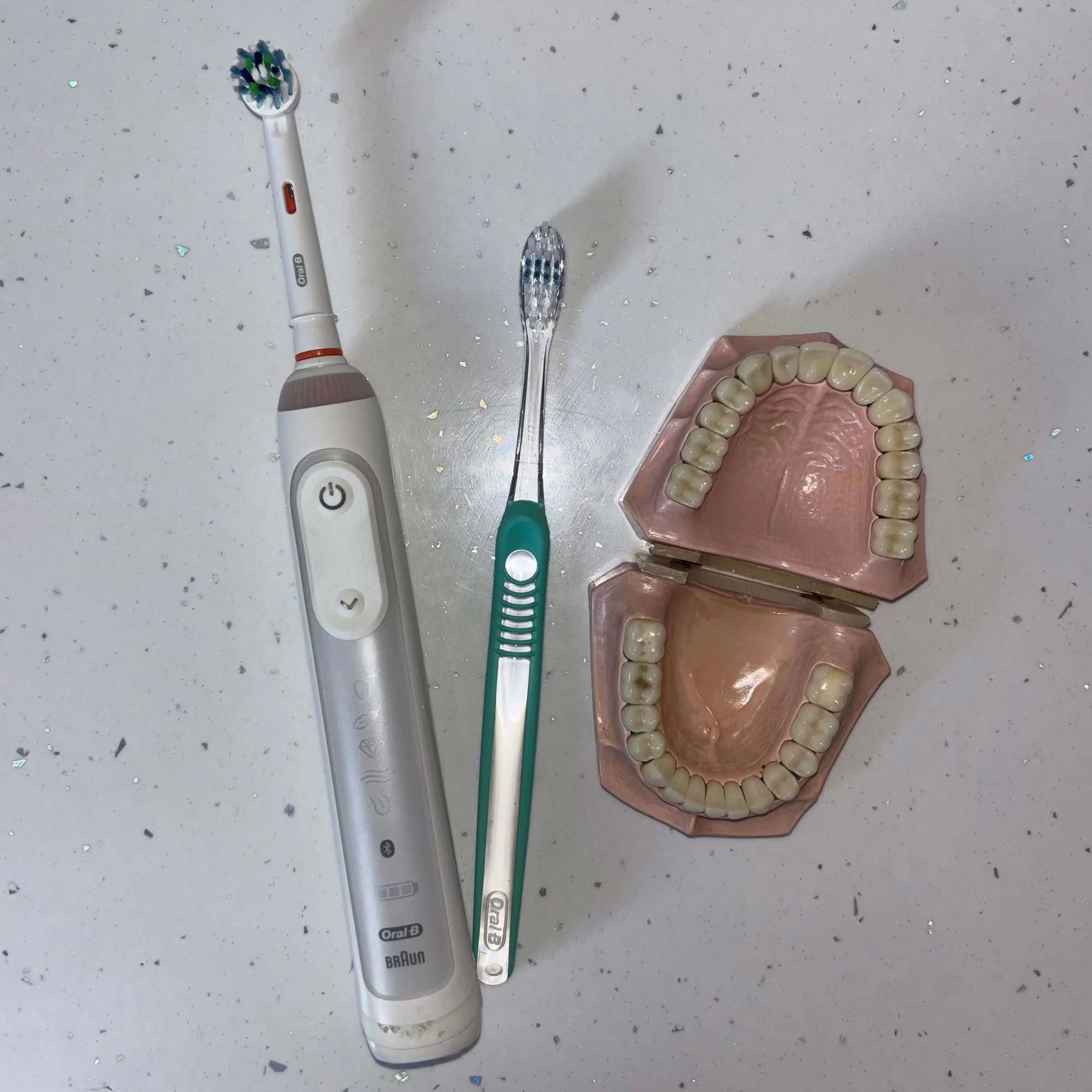
Which Is Right for You?
Both manual and electric toothbrushes can clean your teeth effectively. However, an electric toothbrush can make effective brushing easier and more consistent.
Here’s how they compare:
Plaque Removal
Manual: Effective with good brushing technique.
Electric: 21% greater plaque reduction after 3 months, according to a Cochrane review.
Gum Health
Manual: Effectiveness depends on correct angle and pressure.
Electric: 11% greater reduction in gingivitis after 3 months, according to a Cochrane review.
Ease of Use
Manual: Requires good technique and manual control.
Electric: Does much of the brushing movement for you.
Built-In Timer
Manual: No.
Electric: Yes — included on most models.
Pressure Sensor
Manual: No.
Electric: Available on many mid-range and premium models.
Cost
Manual: Around £1–£5.
Electric: Around £25–£300+.
Annual Running Cost
Manual: Approximately £12–£20 for replacement toothbrushes.
Electric: Approximately £15–£30 for replacement brush heads.
Best for Limited Dexterity
Manual: Requires more manual control.
Electric: Easier to use and can be particularly helpful for people with limited dexterity.
The Bottom Line
A manual toothbrush can be very effective when used correctly. However, an electric toothbrush can make brushing easier and more consistent, while features such as timers and pressure sensors can help improve brushing habits.

If you’re looking for a dentist near you in Essex, our Takeley dentists can help, contact us on info@dentalsmilestakeley.co.uk or 01279 879526
